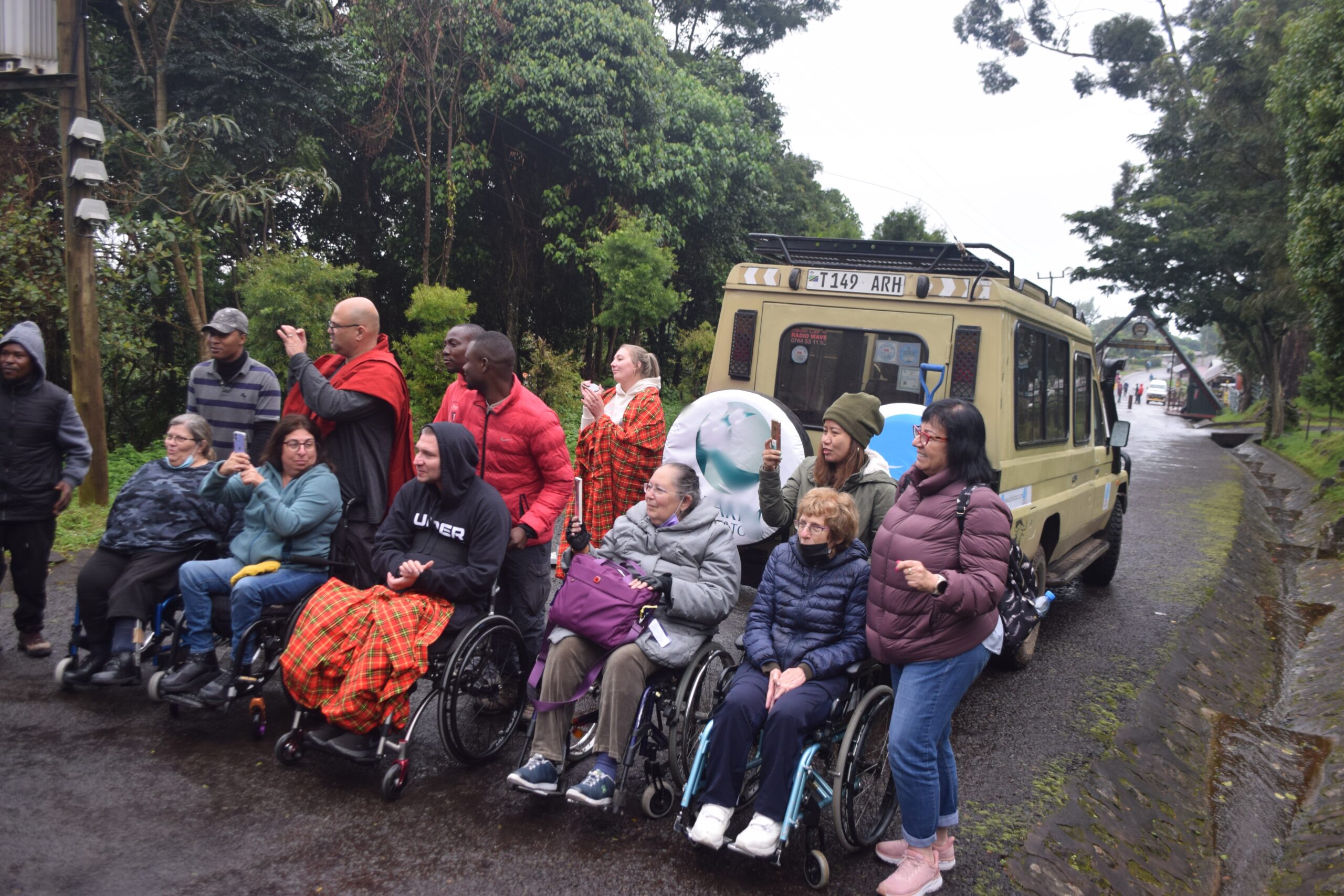
Why Accessible Toilets and Showers Matter on an African Safari
Accessible Toilets and Showers on African Safaris: What Travellers Need to Know
A safari can involve long driving days, remote destinations, changing accommodation and activities in natural environments. For someone who uses a wheelchair, has limited balance, experiences fatigue or requires assistance with personal care, bathroom arrangements can make a significant difference.
Imagine arriving at a beautiful safari lodge after several hours on rough park roads. The wildlife experience has been wonderful, but the bathroom has a narrow entrance, a step into the shower and no suitable space to manoeuvre a wheelchair.
The room may be advertised as accessible, but the practical experience tells a different story.
This is why bathroom accessibility should never be treated as a secondary consideration.
A suitable bathroom can help travelers:
Maintain independence and personal privacy.
Transfer safely between a wheelchair and toilet.
Use the shower without unnecessary physical strain.
Reduce the risk of slips, falls and injuries.
Manage personal care with dignity.
Travel with greater confidence and peace of mind.
Accessibility is also highly individual. A manual wheelchair user may have different requirements from someone using a powered wheelchair. A guest who can walk short distances may need grab bars and a shower seat, while another traveller may require a roll-in shower and assistance with transfers.
There is no single bathroom design that meets everyone’s needs.
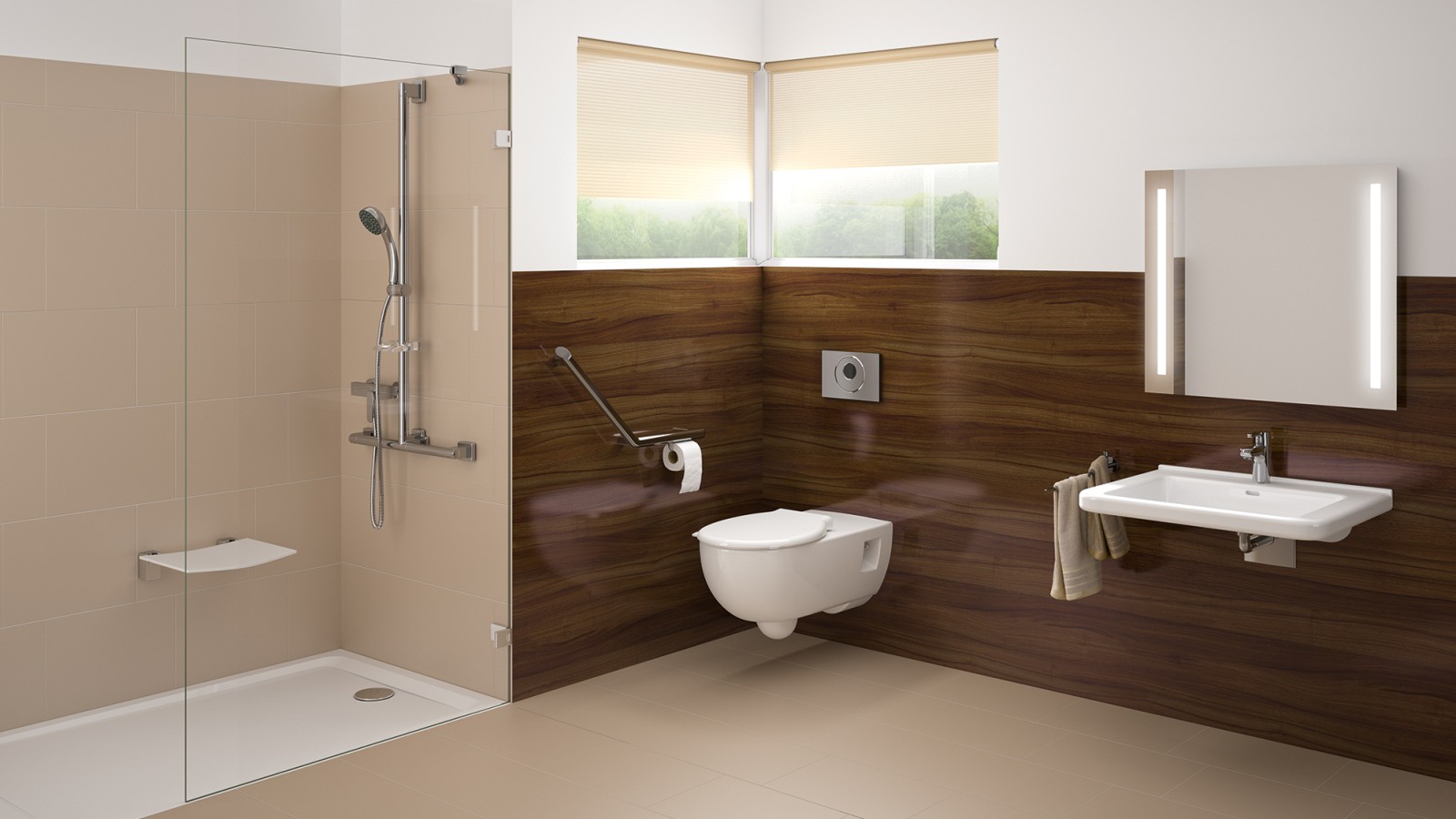
Understanding Accessible Toilets in African Safari Lodges
Accessible toilets are designed to make using the bathroom safer and more convenient for people with mobility limitations. However, the availability and standard of accessible facilities vary between African destinations, accommodation categories and individual properties.
In Tanzania, some hotels and safari lodges have incorporated accessibility features into their rooms, while others have limited adaptations or no purpose-designed accessible facilities.
Travelers should therefore avoid assuming that a property is accessible simply because it describes itself as wheelchair-friendly.
1. Sufficient Space for Wheelchair Manoeuvring
One of the first things to consider is the amount of space inside the bathroom.
A wheelchair user needs enough room to enter, turn and position their chair appropriately. A bathroom might have a wide entrance but still be difficult to use if the space around the toilet, basin and shower is restricted.
Before booking, ask about:
Bathroom doorway width.
Available turning space.
Space beside the toilet for wheelchair positioning.
Whether the bathroom has a level entrance.
Whether the washbasin is accessible from a seated position.
Where possible, request actual measurements and photographs rather than relying on general descriptions.
2. Grab Bars and Support Rails
Grab bars provide additional support for travellers who need assistance sitting down, standing up or maintaining their balance.
Ideally, appropriately positioned grab bars should be available beside the toilet and within the shower area.
However, their presence alone does not guarantee safety. They must be securely installed and positioned according to the traveller’s individual requirements.
Travellers should ask whether the rails are fixed to the wall, where they are positioned and whether the bathroom has other appropriate support features.
3. Accessible Toilet Height and Transfer Space
Toilet height can influence how easily someone transfers from a wheelchair.
Some travellers require a higher toilet seat, while others need sufficient space beside the toilet for a side transfer or assistance from a companion.
The position of grab bars, the direction of transfer and the available floor space should all be considered.
For guests who require assistance, it is important to understand whether the bathroom layout allows their companion or caregiver to help safely and comfortably.
4. Accessible Washbasins and Mirrors
A washbasin should ideally allow a wheelchair user to approach comfortably without obstruction underneath.
A basin mounted at a suitable height, with accessible taps and enough knee clearance, can make everyday personal care considerably easier.
Mirrors should also be positioned so that guests can use them while seated.
These details may appear small, but they contribute significantly to independence.
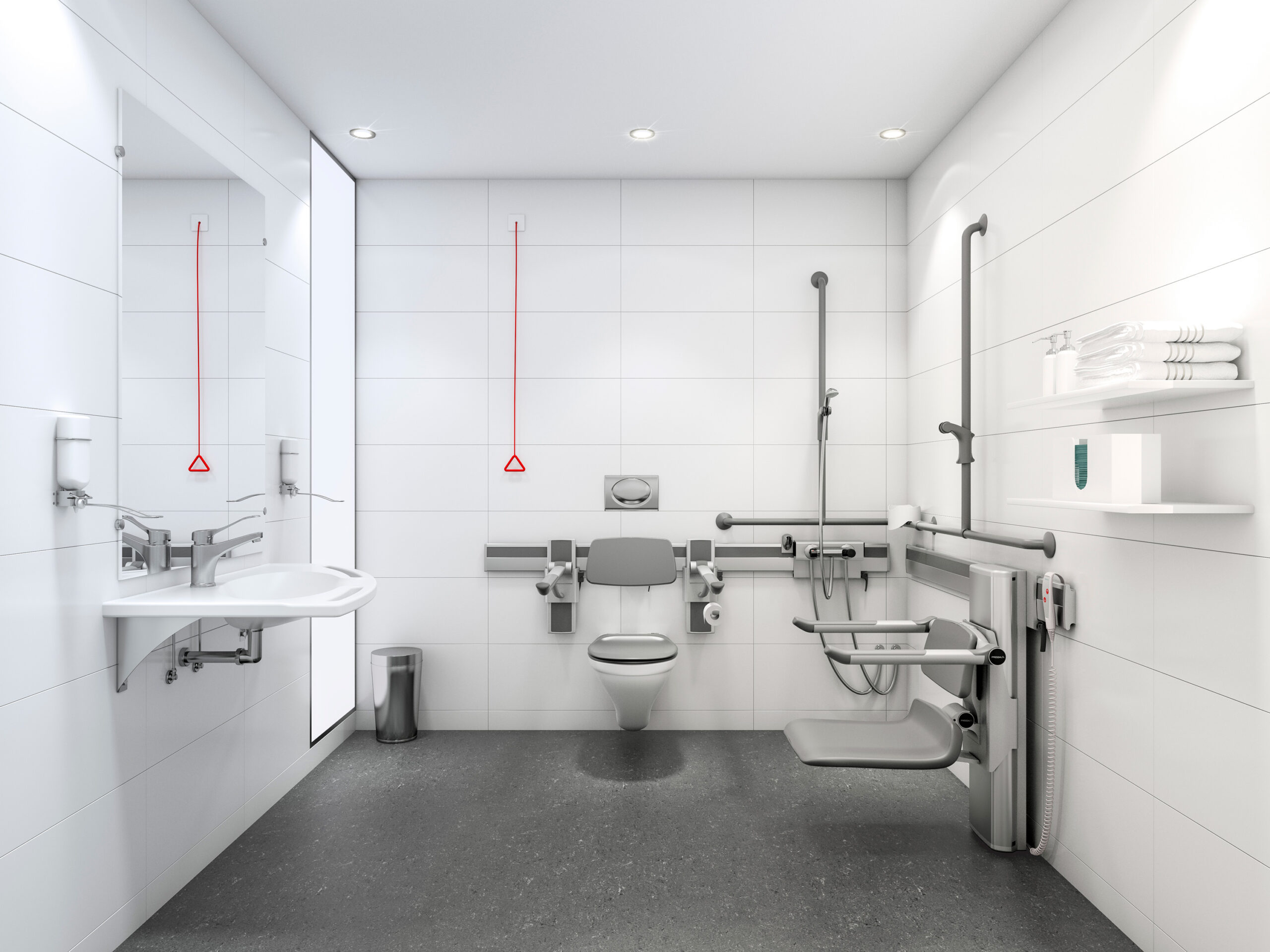
Accessible Showers: What Should Travelers Look For?
Accessible Showers: What Should Travelers Look For?
Showers are another important consideration when choosing accessible safari accommodation.
A beautiful bathroom with modern fittings may still be unsuitable for someone with limited mobility if the shower has a raised edge, a slippery floor or insufficient space for assistance.
For many wheelchair users, a roll-in shower is the preferred option.
1. Roll-In Showers
A roll-in shower has a level or suitably accessible entrance that allows a wheelchair user to enter without having to step over a raised shower tray.
This design is particularly useful for travellers who cannot stand or safely transfer over a shower threshold.
When checking accommodation, ask whether the shower is genuinely level-access or whether there is a small step or raised edge.
Also establish whether there is enough space to manoeuvre inside.
2. Shower Chairs and Seating
Not every traveller can stand safely while showering.
A shower chair or fixed shower seat can provide additional stability and comfort. Some guests may need a wall-mounted seat, while others prefer a movable shower chair.
Before travelling, confirm:
Whether a shower seat is available.
Whether it has a backrest and armrests, if required.
Whether it is stable and suitable for the guest’s weight.
Whether there is enough space to position a wheelchair.
Whether the shower fittings can be reached while seated.
Travellers who require specialist shower chairs may prefer to bring their own equipment if suitable alternatives cannot be confirmed locally.
3. Handheld Showerheads
A handheld showerhead can make showering much easier for people who cannot stand or need to remain seated.
It allows the user or caregiver to direct the water without having to move around unnecessarily.
Ideally, the shower controls should also be reachable from a seated position.
4. Non-Slip Flooring and Safe Drainage
Bathroom safety is not only about wheelchair access.
Wet floors can create serious difficulties for people with limited balance, walking difficulties or reduced mobility.
Non-slip flooring, effective drainage and suitable support rails can help reduce the risk of accidents.
Travellers should also ask whether there are shower curtains or screens that restrict movement, and whether the floor becomes excessively slippery when wet.
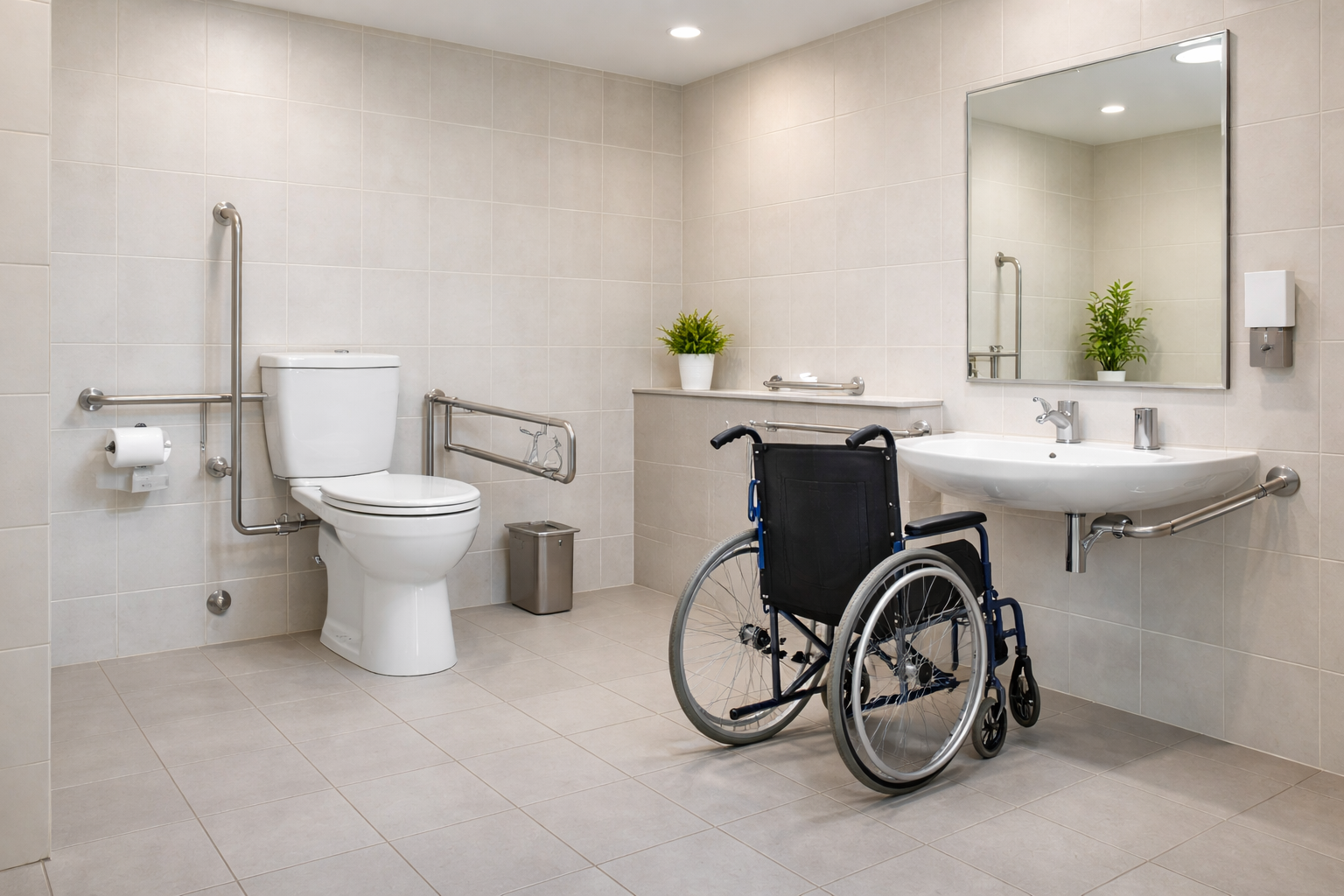
Are All African Safari Lodges Wheelchair Accessible?
The honest answer is no.
Africa offers an extraordinary range of accommodation, from international luxury lodges to small tented camps and locally owned properties. Their accessibility standards differ considerably.
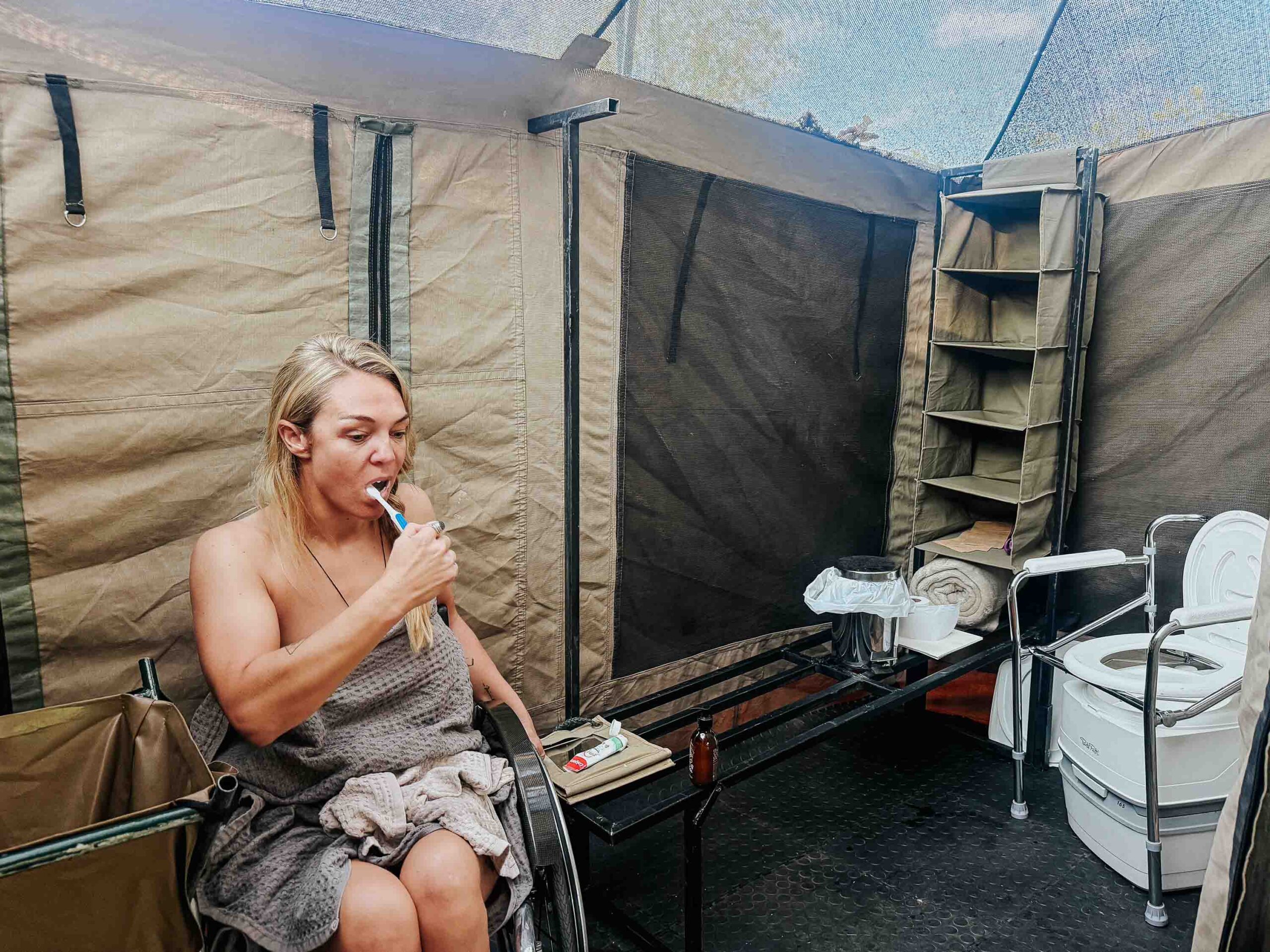
In Tanzania, this is particularly important because many safari lodges are located inside or close to national parks and conservation areas. Some properties are designed around natural landscapes, raised wooden walkways, canvas tents and traditional architectural features.
These settings can create beautiful safari experiences, but they can also present accessibility challenges.
For example:
Some tented camps have raised entrances.
Wooden walkways may have uneven surfaces or steps.
Bathrooms may have limited turning space.
Showers may have raised trays or natural stone floors.
Rooms may be separated from restaurants by long paths.
Some properties may offer ground-floor rooms without fully accessible bathrooms.
A ground-floor room is not necessarily an accessible room, just as a spacious bathroom is not automatically suitable for a wheelchair user.
At Responsible African Safaris, we believe that honest communication is essential. Rather than promising that every lodge is fully accessible, we encourage travellers to discuss their specific requirements before confirming accommodation.
Planning an Accessible Safari in Tanzania: Important Bathroom Considerations
Tanzania is home to some of Africa’s most remarkable safari destinations, including Serengeti National Park, Ngorongoro Conservation Area, Tarangire National Park and Lake Manyara National Park.
However, planning an accessible safari requires careful consideration of the accommodation available along the route.
A property that works well for one traveller may not meet the needs of another.
When preparing an itinerary, we recommend assessing bathroom facilities at every overnight stop rather than checking only the first and last hotels.
Serengeti National Park
The Serengeti has a wide selection of accommodation, including permanent lodges and seasonal tented camps.
Some properties offer spacious bathrooms and modern facilities, while others may have more traditional layouts.
Travellers should check bathroom entrance widths, shower access, toilet positioning and the distance between accommodation units and shared facilities.
Ngorongoro Conservation Area
Accommodation around the Ngorongoro highlands offers spectacular views and access to the crater.
However, some properties are built on sloping landscapes, and pathways may involve gradients or steps.
Bathroom accessibility should be checked alongside room access, restaurant access and the distance from parking areas.
Tarangire National Park
Tarangire accommodation ranges from permanent lodges to tented camps surrounded by beautiful natural landscapes.
Travellers should confirm whether bathrooms are ensuite, whether showers are level-access and whether the room has sufficient space for mobility equipment.
Lake Manyara and Karatu
Karatu is a popular overnight destination for travellers visiting the northern safari circuit.
Some accommodation properties offer more conventional hotel-style layouts, which may provide practical alternatives for guests requiring particular bathroom arrangements.
However, every property still needs to be assessed individually.
What Should You Ask Before Booking an Accessible Safari?
One of the best ways to avoid disappointment is to ask detailed questions before making a reservation.
A responsible tour operator should be willing to communicate directly with accommodation providers and establish whether their facilities genuinely meet the traveller’s requirements.
Here is a practical checklist.
Bathroom access
Is the bathroom entrance step-free?
What is the doorway width?
Is there sufficient wheelchair turning space?
Is there space beside the toilet for transfers?
Toilet facilities
Is the toilet height suitable?
Are grab bars installed?
Can the toilet be accessed from the side?
Is there enough space for a caregiver if assistance is needed?
Shower facilities
Is there a roll-in shower?
Is there a raised shower threshold?
Is a shower chair available?
Is there a handheld showerhead?
Are grab bars installed?
Is the shower floor non-slip?
Additional accommodation details
Is the bedroom on the ground floor?
Are there steps between the room and restaurant?
Is the route from the vehicle to the room wheelchair-friendly?
Can the lodge provide photographs and measurements?
Are staff available to assist when requested?
Whenever possible, request photographs of the actual room and bathroom being reserved, not simply general promotional photographs.
Why Personalised Planning Matters More Than Accessibility Labels
Accessible travel specialists such as Kristy Durso emphasize the importance of understanding the traveller rather than making assumptions based on disability.
This is especially important when arranging accommodation in Africa.
Two people who use wheelchairs may have completely different requirements. One may be able to transfer independently, while another may need a hoist or assistance from a caregiver.
Someone with limited mobility may be comfortable using a standard shower with grab bars, while another person may require a fully accessible roll-in shower.
This is why we encourage a pre-travel consultation.
At Responsible African Safaris, we want to understand what makes a traveller comfortable, what equipment they use and what assistance they may need.
We also recognize the importance of the wider principles highlighted by African expedition specialist Vivienne Gunning: accessibility should be based on dignity, realistic expectations and thoughtful human judgment.
A bathroom should not simply pass an accessibility checklist. It should work for the person who will actually use it.
How Responsible African Safaris Helps Travellers Plan Accessible Accommodation
As a locally based Tanzania tour operator, Responsible African Safaris understands the importance of working closely with accommodation providers and assessing the practical details of a safari.
Our approach is based on individual consultations, honest communication and advance planning.
We help travellers by:
1. Understanding individual requirements
Before preparing an itinerary, we discuss mobility needs, wheelchair dimensions, transfer abilities, shower preferences and any additional assistance required.
2. Checking accommodation facilities
We communicate with lodges and hotels to establish what bathroom facilities are available. Where possible, we request photographs, measurements and confirmation of specific features.
3. Selecting suitable properties
We consider the traveller’s requirements alongside the safari route, budget, comfort preferences and available accommodation.
4. Coordinating the journey
We consider bathroom access at every overnight stop, as well as travel distances, rest breaks and the practical arrangements required throughout the safari.
5. Communicating limitations honestly
If a property does not have a roll-in shower, suitable grab bars or enough wheelchair manoeuvring space, we explain this before the trip. We also explore realistic alternatives.
Our objective is not to promise that every property in Tanzania is fully accessible. It is to help each traveller make informed decisions and enjoy the best possible experience within the available facilities.
Travelling with Your Own Accessibility Equipment
Some travellers prefer to bring personal equipment because they know it fits their needs.
Depending on individual requirements, this may include:
A portable shower chair.
Transfer boards.
Portable grab bars designed for suitable surfaces.
Raised toilet seats.
Personal hygiene equipment.
Waterproof wheelchair accessories.
Before travelling, check airline baggage policies, equipment dimensions and whether the accommodation has sufficient space to use and store the equipment.
Portable equipment should never be assumed to be suitable for every bathroom. For example, suction grab bars require appropriate surfaces and should not be treated as substitutes for professionally installed support rails unless their suitability has been established.
If specialist equipment is essential, it is best to confirm its availability and compatibility well in advance.
Accessibility Is About Dignity, Comfort and the Freedom to Explore
An African safari should be about unforgettable experiences, not worrying about whether the bathroom at the next lodge will be suitable.
Accessible toilets and showers may not be the most glamorous part of safari planning, but they are among the most important.
The wider lesson from accessible travel advocates is that inclusion requires more than infrastructure. It requires listening, understanding, honest information and a willingness to adapt.
Africa’s wilderness, wildlife and cultures should not be dismissed as inaccessible simply because challenges exist. Equally, those challenges should never be hidden behind unrealistic marketing promises.
With careful preparation, suitable accommodation, reliable local support and realistic expectations, more travellers can experience the magic of Tanzania.
At Responsible African Safaris, we believe that every traveller deserves to be treated with dignity, to have their individual needs respected and to make informed choices about their journey.
Because an unforgettable safari should begin with feeling welcome, comfortable and confident — including in the smallest but most important details.
Frequently Asked Questions About Accessible Toilets and Showers on African Safaris
1. Are there wheelchair-accessible toilets in Tanzania’s safari lodges?
Yes, some lodges and hotels in Tanzania offer wheelchair-accessible toilets. However, facilities vary considerably. It is important to confirm doorway widths, turning space, toilet positioning and grab bars with each property before booking.
2. Can I find safari lodges with roll-in showers in Tanzania?
Some properties may offer level-access or roll-in showers, but availability is limited and should never be assumed. Ask the tour operator to verify the actual bathroom configuration and provide photographs before confirming your reservation.
3. Do accessible safari rooms have shower chairs?
Some accommodation providers may offer shower chairs, but this is not standard across all properties. Travellers who require a particular type of shower seat should confirm availability and suitability in advance.
4. Can I travel on safari if I need assistance using the bathroom?
Yes, it may be possible to arrange a safari with appropriate support. However, the itinerary, accommodation, vehicle and caregiver arrangements should be planned around your individual needs. Discuss your requirements with your tour operator before booking.
5. Are tented safari camps suitable for wheelchair users?
Some tented camps can accommodate wheelchair users, while others have raised entrances, narrow bathrooms or uneven walkways. Accessibility varies by property, so individual assessment is essential.
6. How can I make sure my safari accommodation is genuinely accessible?
Request actual photographs and measurements of the bedroom and bathroom. Confirm toilet access, shower design, grab bars, turning space, entrance thresholds and the route between the room and shared facilities.
7. When should I discuss bathroom accessibility with my safari operator?
As early as possible, ideally before accommodation is selected or deposits are paid. Early communication allows time to check facilities, compare properties and make alternative arrangements where necessary.
Plan Your Accessible Tanzania Safari with Responsible African Safaris
Dreaming of exploring the Serengeti, Ngorongoro, Tarangire or Zanzibar?
Let us understand your travel requirements and help you plan a journey that considers the details that matter to you, from adapted safari vehicles to accessible bathrooms and comfortable accommodation.
Contact Responsible African Safaris to start planning your Tanzania Accessible Holiday.