Tanzania Travel Informations
Why Choosing to Travel to Tanzania with us? “Tanzania is…
The email lands in our inbox most weeks, and it almost always starts the same way. Someone is writing for their mother, or their husband, or for themselves. They’re polite and a little careful. Then, somewhere in the second paragraph, the real question shows up: is this actually possible?
Not possible in theory. Possible for a person who uses a wheelchair to sit in a vehicle in the middle of the Serengeti and watch a lioness walk past, close enough that you can hear her breathing.
The honest answer is yes. It takes planning, a few practical adjustments, and some straight talk about what Tanzania is and isn’t. This post is our attempt at that straight talk. If you’ve been wondering whether accessible Tanzania is a real thing or just a phrase on a brochure, stay with us for a few minutes.
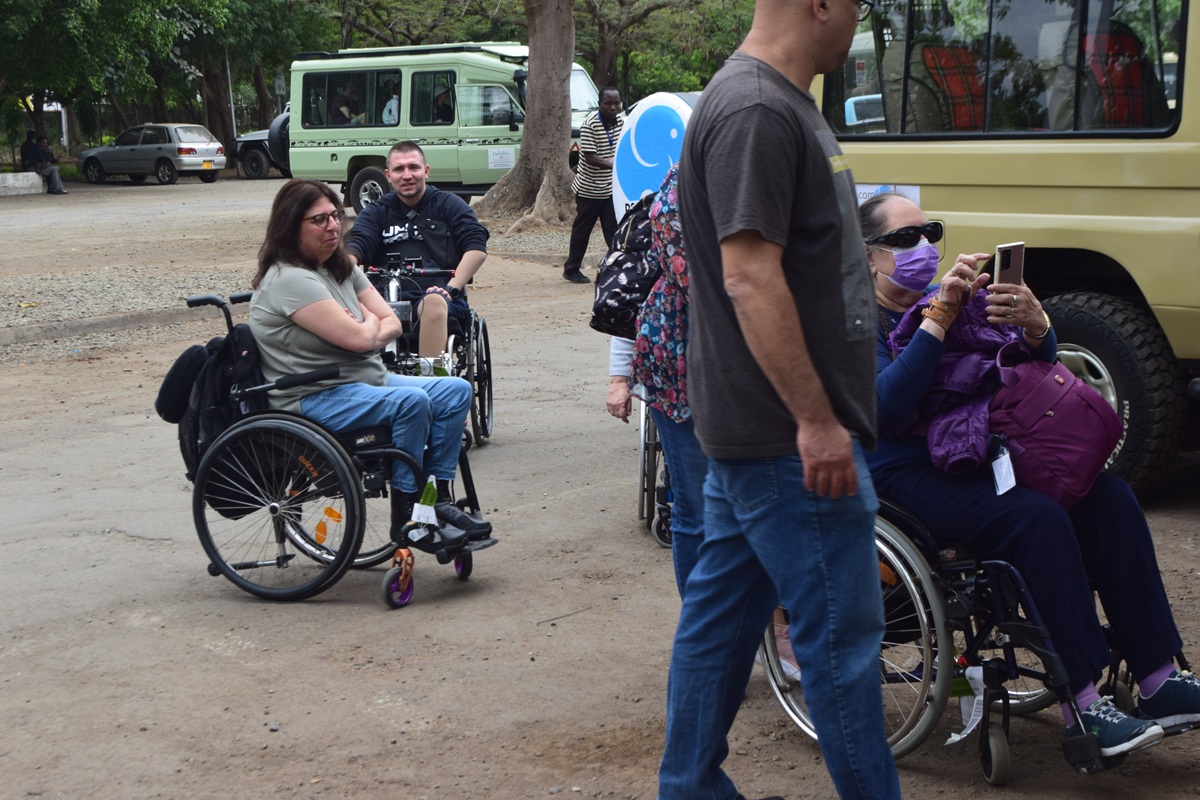
Here’s a trip that looks a lot like ones we’ve organized. We’ve blended a few real journeys together and changed the details, so think of her as Margaret.
Margaret is in her seventies. She’s wanted to see the Serengeti since she was a girl watching nature documentaries on a small television. Two years ago she began using a wheelchair, and she quietly put the dream in a drawer. Her daughter found the drawer. The daughter did what daughters do: she started sending emails.
What Margaret was afraid of wasn’t really the wheelchair. It was being a problem. She imagined a group of cheerful people waiting while she got in and out of a vehicle, a guide sighing at a rocky path, a lodge where the bathroom door was too narrow and everyone pretended it was fine.
That fear is worth taking seriously, because it’s the thing a good operator has to solve. Not with a ramp, although a ramp helps. With the kind of planning where nobody ever has to feel like a problem.
Arusha, and meeting the vehicle
Most journeys begin in Arusha, the busy, dusty, friendly town at the foot of Mount Meru. After a long flight, the plan is to get you to a bed and let you sleep. The real work starts the next morning, when you meet the vehicle.
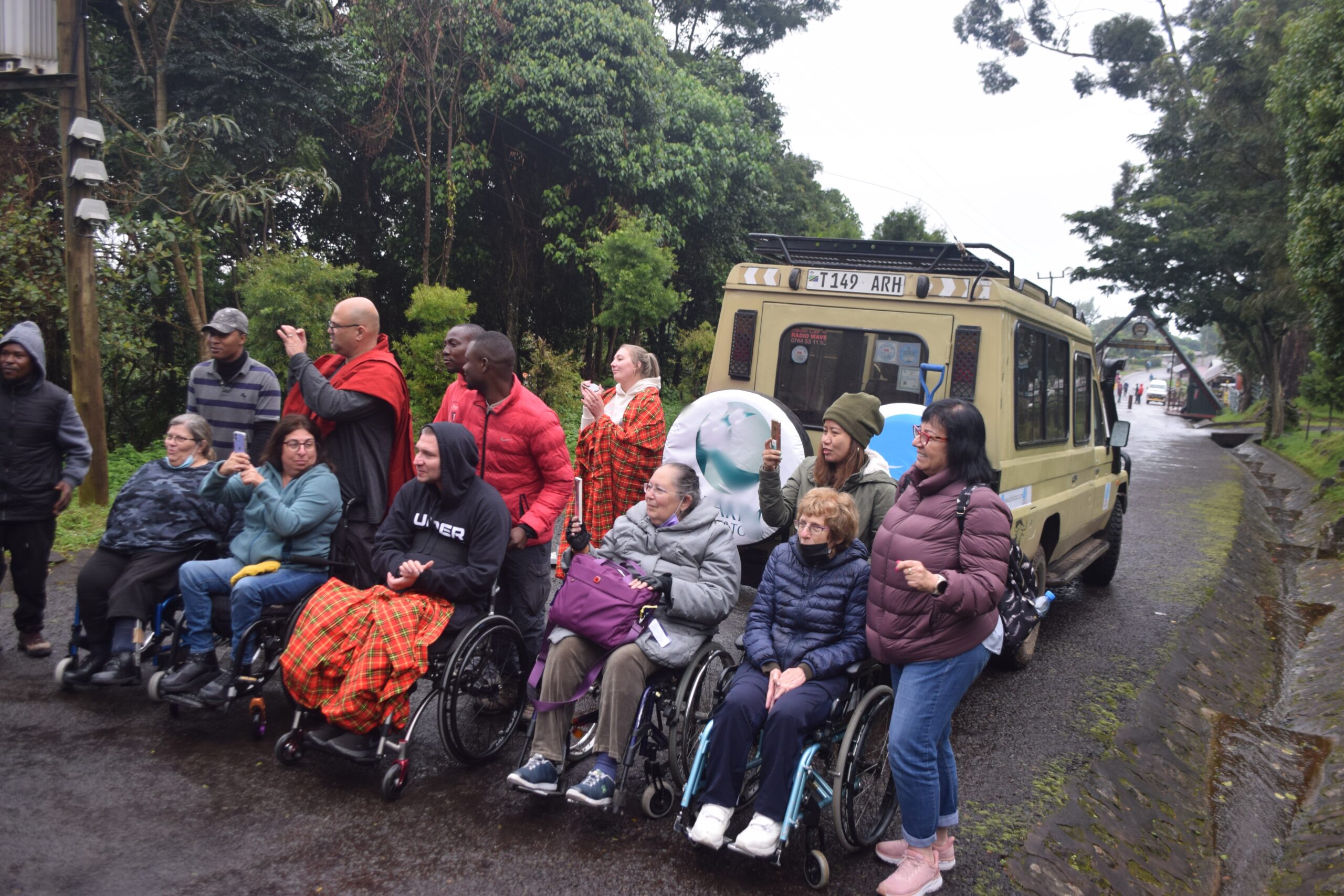
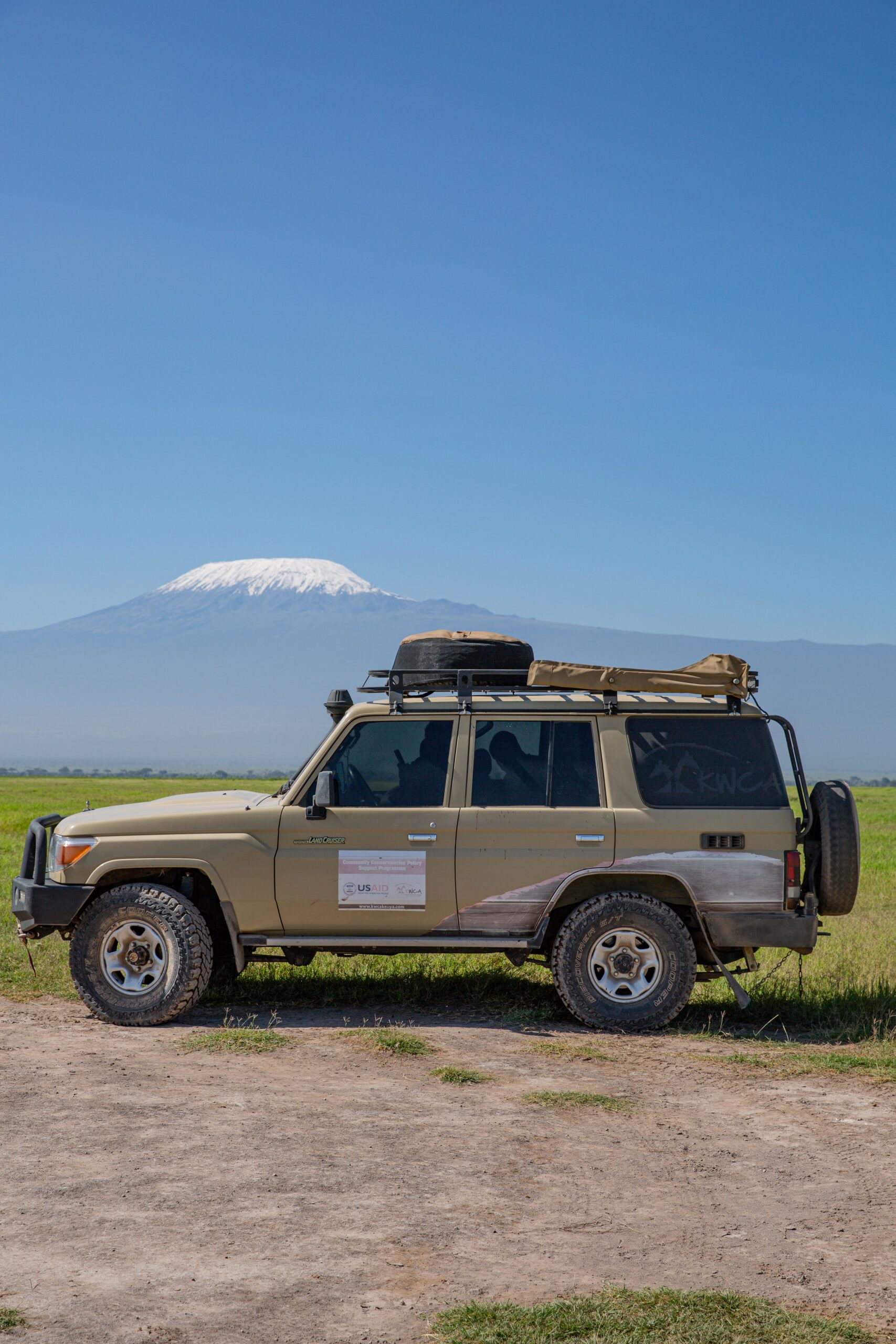
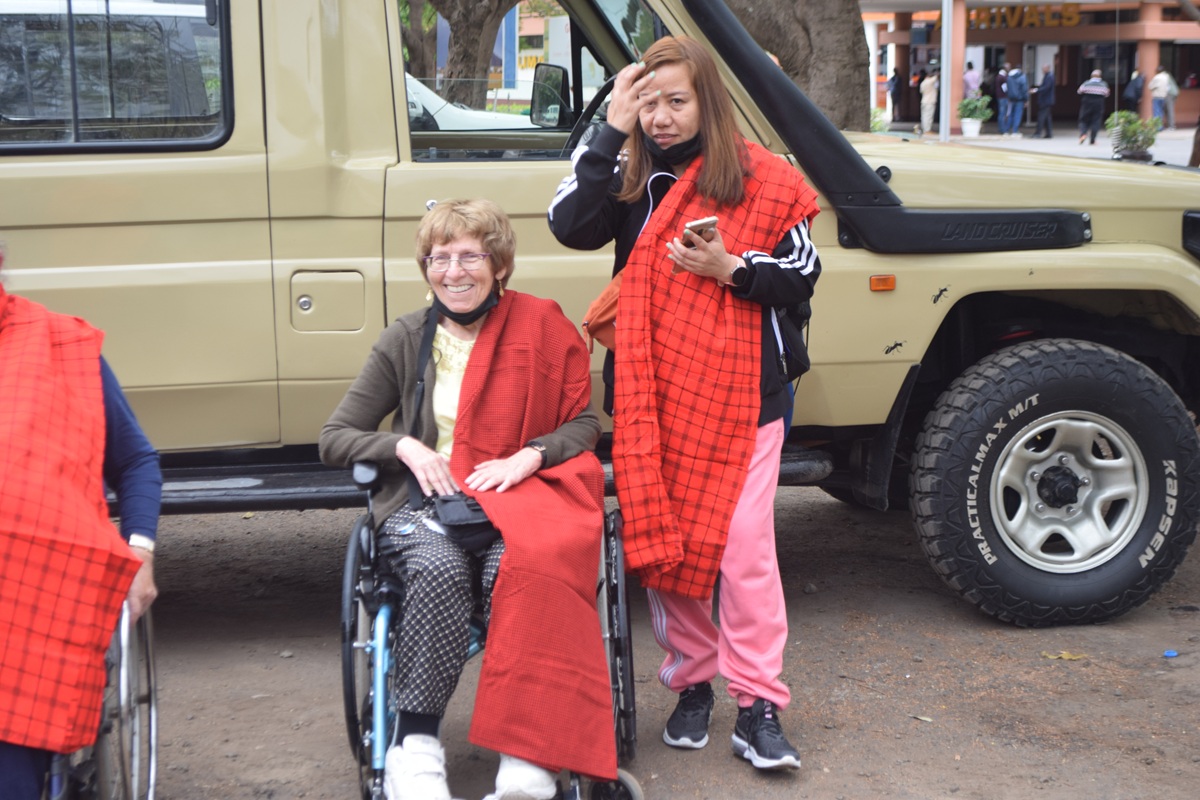
Our safari vehicles are Land Cruisers adapted for wheelchair access, with an extended roof and wide doors. The ramp is about 80 centimetres wide, and the door opening is roughly 85 centimetres wide and 120 high. Inside, there’s enough headroom for a person to stay comfortable, with a raised seat and big windows so the view isn’t blocked by the person in front.
Here’s the part that matters, and we’d rather say it plainly than bury it. Guests roll up the ramp in their own chair, then move across to a regular vehicle seat. The wheelchair travels separately, packed securely beside you. So accessible Tanzania, the way we run it today, works best for people who can manage that transfer with some help. If you can’t, that’s not a dead end, but it’s a conversation we need to have before you book, not after you land.
Margaret did the transfer with her daughter on one side and our guide, Frank, on the other. It took about a minute. Then it was just a woman in a seat by a window, looking out at a market stall selling oranges. She told us later that was the moment she believed it was real.
If there’s one thing we’d tattoo on the back of every itinerary, it’s this: go slowly.
The standard Tanzania safari is a race. Wake at five, drive four hours, game drive, lunch, game drive, collapse. For plenty of travelers that rhythm is tiring. For someone with limited mobility, it can be miserable, and it hides the fact that the animals don’t care how fast you get there.
So we build gentler days. The drive from Arusha to Karatu, the green farming country near the Ngorongoro Crater, is short enough that you arrive with energy left over. We stop when someone needs to stop. If a view is worth ten minutes, it gets ten minutes, and nobody checks a watch.
The same logic applies inside the parks. Game drives from a vehicle are one of the most naturally accessible ways to see wildlife anywhere in the world. You don’t walk. You sit, you watch, and the animals come to you, especially around waterholes and along the quieter tracks. A good guide reads the land and chooses the routes that avoid the worst bumps, and a guide who actually cares will tell you honestly when a track is rough and offer to turn back.
Margaret’s favorite moment on that stretch had nothing to do with a big animal. A troop of baboons crossed the road, a mother carrying a baby on her back, and the guide switched off the engine. They sat in silence for fifteen minutes. “That was the best part,” she said afterward, and she meant it.
Flying into the Serengeti
Many of our guests move between Arusha and the Serengeti by small plane rather than by road. It saves a punishing day of driving, and the view from the window is a safari in itself, with the plains laid out like a map.
It also raises a fair worry. Small aircraft, small airstrips, steps up into the cabin. How does that work for someone who can’t climb them?
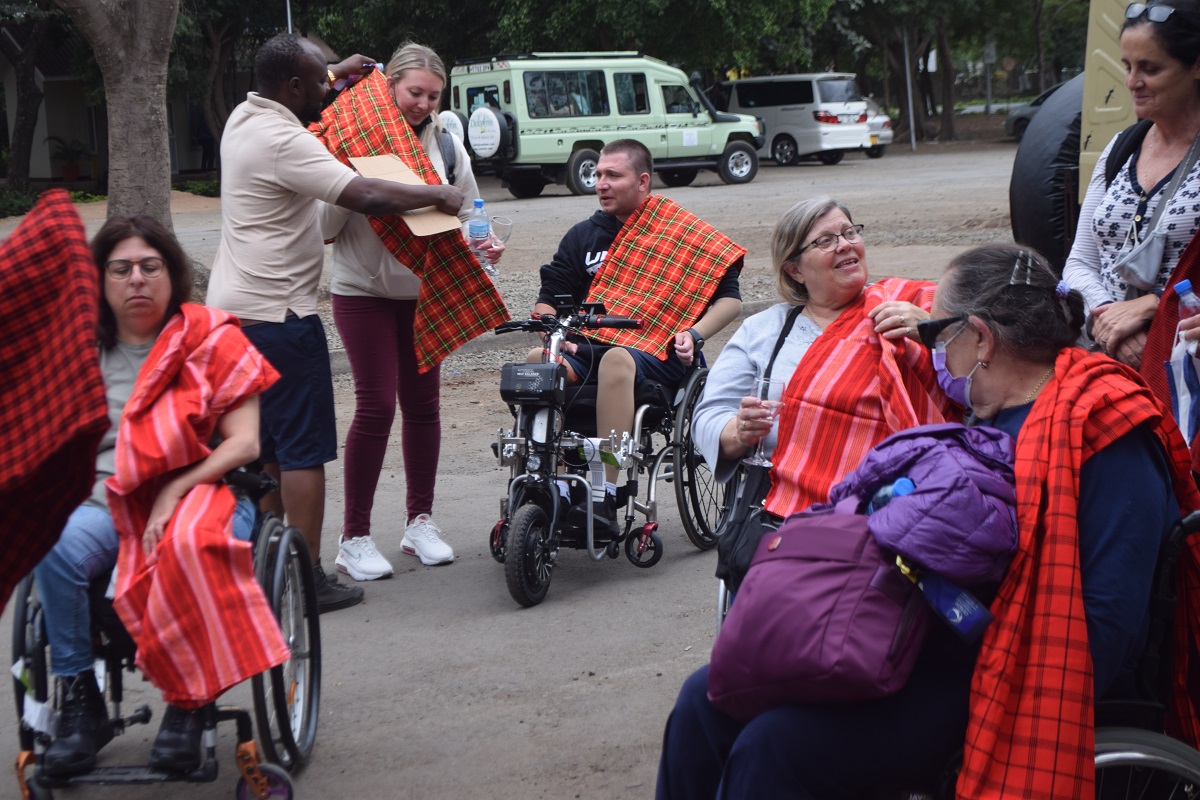
It works with coordination, and it works best when it’s arranged well in advance. We tell the airline and the ground crew about each guest’s needs before the trip; we meet you at both ends, and the people lifting and guiding you know what they’re doing before you arrive. We’ll also be upfront that some aircraft are tighter than others, and that weight limits on luggage and equipment are strict. A folding wheelchair and a power chair are very different conversations, and we’d rather sort that out in an email in March than on the tarmac in July.
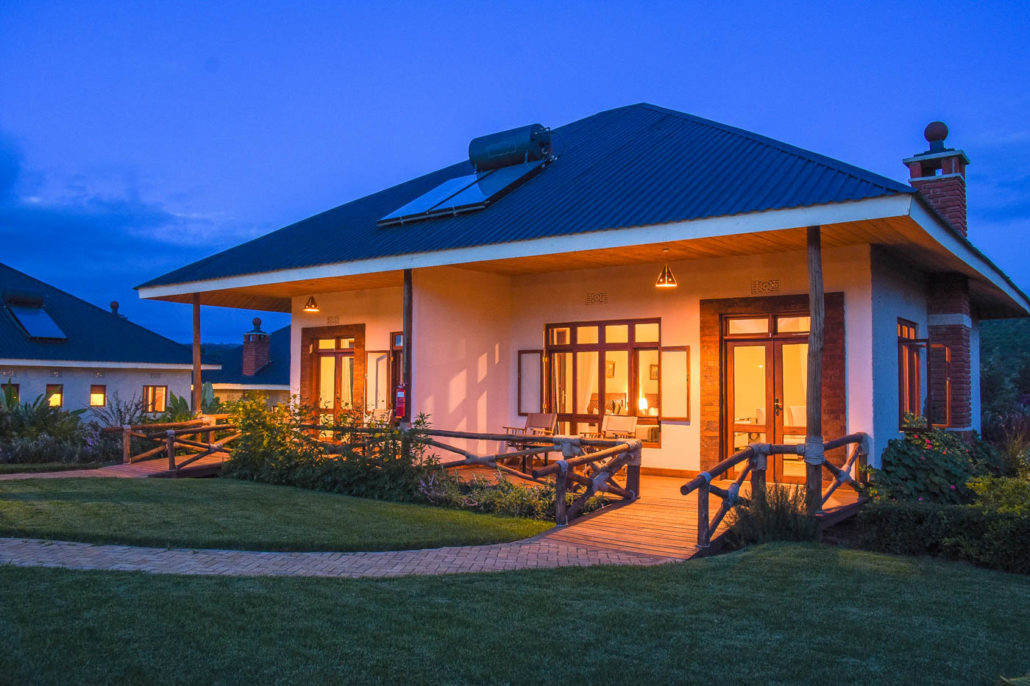
This is where the word gets slippery. In a city, accessible usually means a ramp, a lift, a wide door. In the bush, it means all of that and a few extra things that nobody thinks about until they’re standing in a bathroom.
We look for step-free access from the car to the room, wide enough doors, and a roll-in shower. We look at the path from the room to the dining area, because a beautiful lodge with a sandy slope between you and dinner is not an accessible lodge. And when a place falls short, which does happen in remote areas, we bring our own equipment: shower chairs, commode chairs, and similar basics that make an average room workable.
We’d be lying if we said every camp in the Serengeti is perfect. Some tented camps are charming and hard to navigate. A few are wonderful and nearly flat. The point of knowing the properties well is that we can tell you which is which, and put you in the right one.
One of our guests, traveling with an eighty-year-old relative, wrote afterward that a few areas were naturally uneven but that the staff was always ready to help. We like that sentence because it doesn’t pretend. Accessible Tanzania isn’t a perfectly smooth surface. It’s a place where a team knows the ground and shows up when you need a hand.
People ask us the same question every year: “When is the migration?” We understand why. It would be lovely if the herds followed a timetable. They don’t. Around two million wildebeest, along with zebra and gazelle, move in a huge loop through the Serengeti, chasing fresh grass and rain, and the rain has never once checked our calendar.
What we can give you is a rough rhythm. From about January to March, the herds gather on the short-grass plains of the south, around Ndutu. This is calving season. Hundreds of thousands of calves arrive within a few weeks, the plains are loud and busy, and lions, cheetahs and hyenas gather at the edges. By April and May the herds start drifting north and west, often through the central Serengeti near Seronera. From around July to October, many head toward the north and the Mara River, where the famous crossings happen. By November and December they turn south again, and the loop begins once more.
Treat those months as a guide, not a promise. A late rain can keep the herds in one place for weeks. An early one can pull them away. Even our best guides check the radio and the tracks every morning before they decide where to go.
This is where the vehicle earns its keep. You don’t have to leave it. The roof opens, the seats are high, and you watch a story that’s been playing out for thousands of years from a seat as comfortable as your couch, with a thermos of tea within reach.
Margaret was with us at Ndutu in February. She saw a cheetah on a termite mound that morning, and she went quiet for a long time. Then she said, very softly, “I thought I’d missed all this.”
That sentence is why we do the work.
What we can promise, and what we can’t
Because the migration moves, we can’t guarantee where the herds will be on the day you arrive. Honestly, we’d be suspicious of anyone who does. What we can do is plan around the odds. We choose the area and the month that give you the best chance, we build in extra days so you aren’t rushing, and we’re ready to change the plan if the herds move.
Tanzania is a wild place. Roads can be rough, weather changes the plan, and some experiences, like walking safaris or river-crossing viewpoints on uneven ground, may not suit everyone. We’ll tell you so. We can’t provide medical care ourselves, though through our partners we can arrange a nurse, a caregiver or a doctor to travel with you, and line up access to emergency help.
What we can promise is honesty, preparation, and a team that treats your needs as the starting point of the trip, not an inconvenience to work around. For most people, that matters more than a guarantee about the herds.

If this feels possible but you’re not sure where to begin, here’s what actually helps.
Tell us about the person traveling: how they get around, what equipment they use, how they usually manage transfers, and what an ordinary day looks like for them. Tell us what you’re hoping to see, and what you’re nervous about. No question is too small. How narrow is the bathroom? How long are the drives? What happens if someone gets tired? We’d rather answer fifty small questions than have you worry about one.
Then we build the trip backwards from your answers. Vehicles first, then lodges, then the pace, then the flights. By the time you arrive, most of the surprises have already been solved.
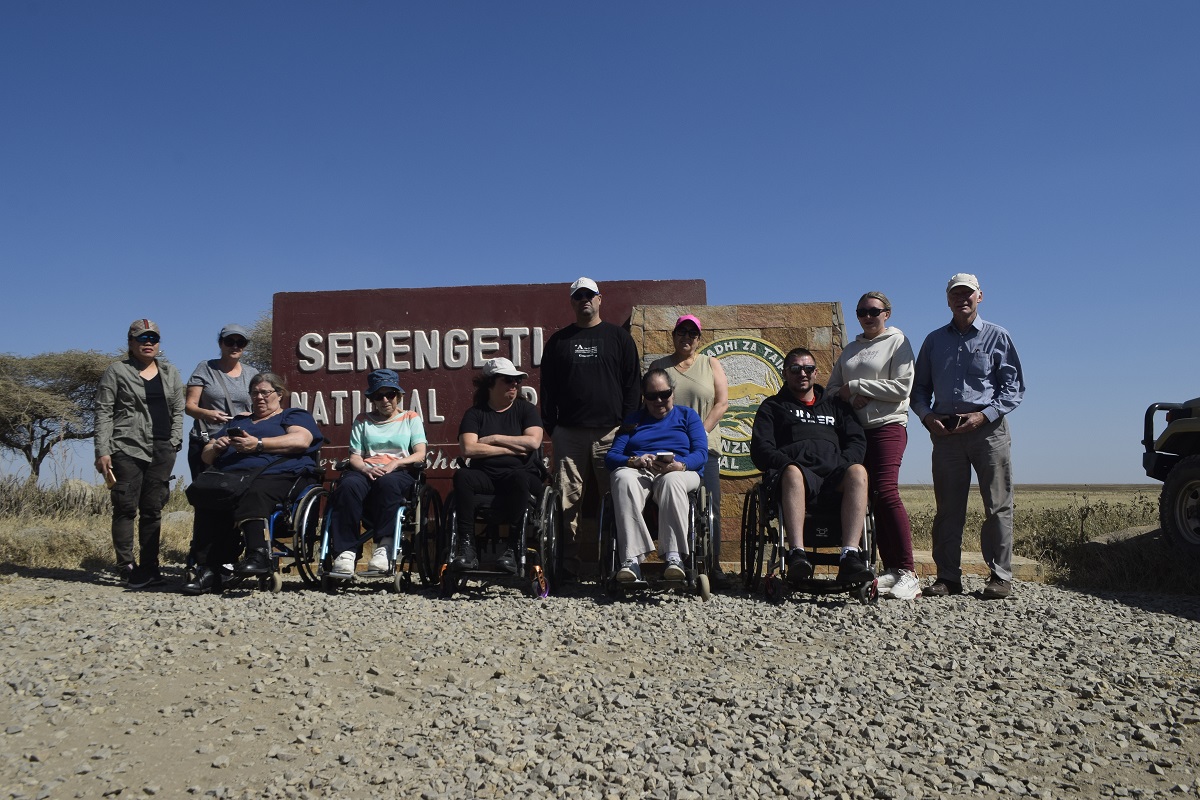
Margaret flew home three weeks later with sunburnt cheeks and about nine hundred photos, most of them of animals’ backsides, which she says is the most honest kind of wildlife photography. Her daughter told us she hasn’t stopped talking about it.
We think about that drawer a lot. There are a great many people with dreams tucked away because someone, somewhere, told them it wouldn’t work, or because they decided it wouldn’t before anyone asked.
Accessible Tanzania isn’t a gimmick or a niche. It’s just a safari, planned carefully, for the person who’s actually going. If you’ve got a drawer of your own, we’d love to help you open it.
Thinking about an accessible safari in Tanzania? Get in touch with Responsible African Safaris and tell us about your trip. We’ll answer honestly, even when the answer is “let’s talk about that.”